Paul Stainton is a digital marketing and communications leader with more than 20 years of experience across B2B SaaS, content, search, eCommerce, and digital strategy, focusing on how people discover, understand, and use information online.
How much time does TextExpander save? It depends on how much of your week goes to retyping, searching for, and copying what you've already written. See what customers changed, and how to estimate your own time back.
Shorthand typing is any way of writing faster with fewer characters than the full words, from Gregg and Pitman symbols to abbreviations that expand into full text. Learn how shorthand systems work, how fast they get, who still uses them, and which tools make digital shorthand practical.
Human-in-the-loop AI workflows work best when reviewers check what changes, not wording that is already approved. Learn where to add human review, what AI should draft, and which language should stay fixed.
Prompt management tools help teams store, version, test, and share the AI prompts that produce good results. Compare 12 of the best, from tools that help business teams reuse prompts in everyday work to platforms developer teams use to ship LLM applications.
An AI prompt library is a shared set of tested prompts your team can find and reuse in any AI tool. Learn how to build one in seven steps, organize and share it, and start with 15 prompts.
ChatGPT has no dedicated library for saved prompts, so most people retype their best ones or dig through old chats. See what ChatGPT can save today and how to keep reusable prompts that work in any AI tool.
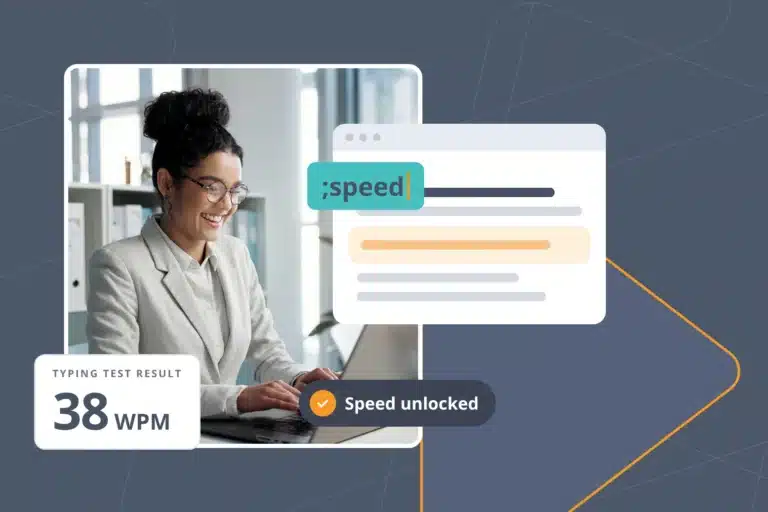
The average typing speed for U.S. adults is about 38 WPM on a computer and 29 on a phone, based on 2026 research. See averages by age group, what counts as a good typing speed for work, and how WPM and accuracy are scored.
Learn how to type faster with touch typing, proper posture, and short daily practice. See typing speed benchmarks from a study of 168,960 typists, free practice tools, and a 4-week plan to build speed that lasts.